Ayush Ministry Releases New Treatment Guidelines for Skin Disorders Across Four Traditional Medicine Systems
Siddha Medicine Receives Special Attention

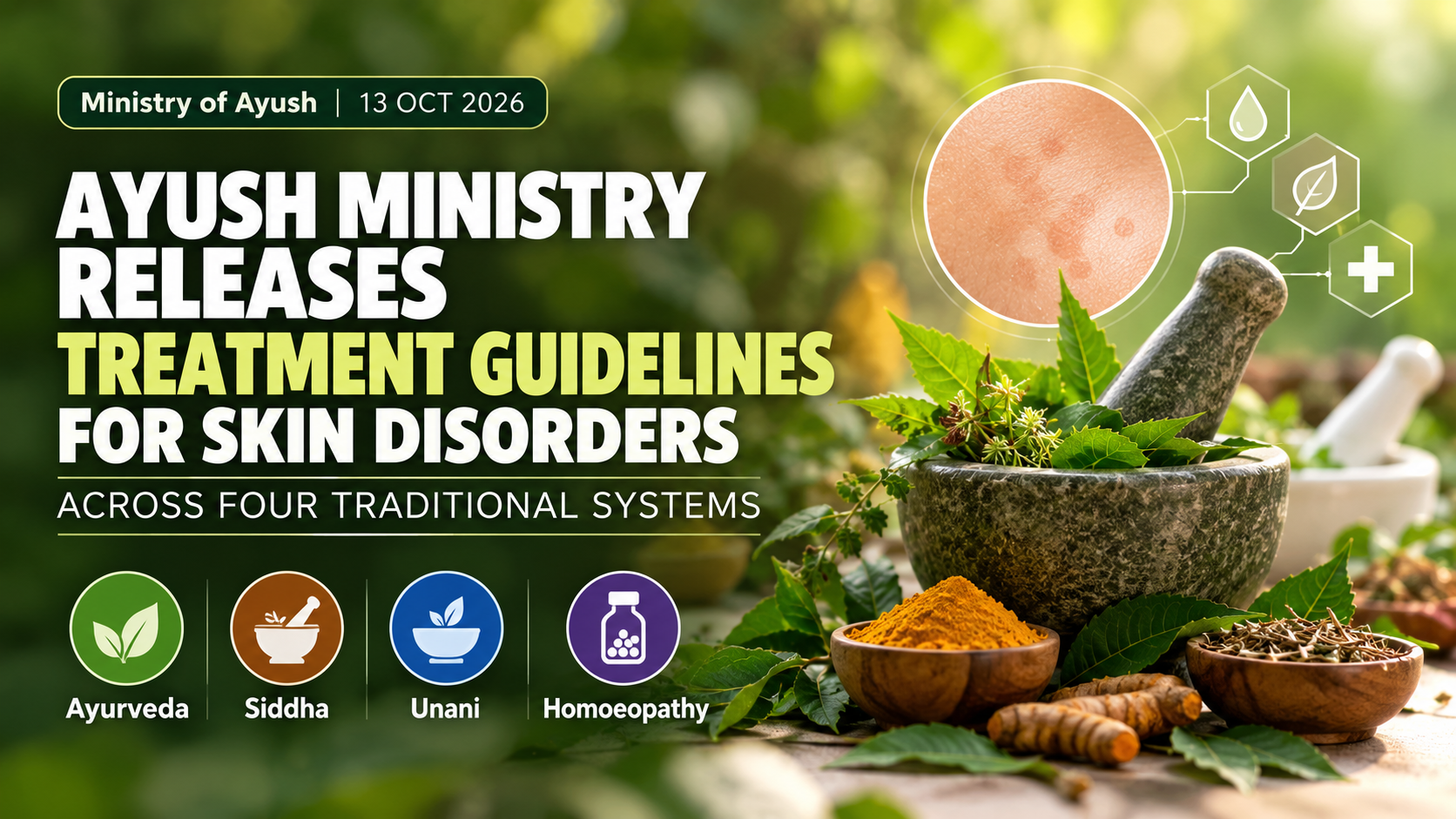
The Ministry of Ayush has released Standard Treatment Guidelines for managing various skin disorders through four traditional systems of medicine — Ayurveda, Siddha, Unani and Homoeopathy. The initiative aims to bring greater consistency to clinical practice and provide healthcare practitioners with structured guidance for the management of common dermatological conditions.
Skin disorders such as psoriasis, vitiligo, dermatitis, urticaria and fungal skin infections affect people across different age groups and can have a significant impact on their quality of life. Through these guidelines, the government seeks to establish a more systematic approach to the assessment, treatment and follow-up of patients within the respective traditional medical systems.
A Step Towards Standardised Traditional Healthcare
The newly released guidelines are intended to serve as reference documents for medical practitioners, researchers, academicians and healthcare policymakers. They are designed to support clinical decision-making and encourage more consistent treatment practices across different healthcare settings.
The initiative also highlights the government’s continued efforts to strengthen the role of traditional systems of medicine in India’s healthcare landscape. By providing structured clinical recommendations, the guidelines seek to improve the quality and consistency of care delivered by qualified practitioners.
Siddha Medicine Receives Special Attention
The inclusion of Siddha medicine is particularly significant for practitioners and institutions working to preserve and develop India’s traditional medical knowledge. Originating in Tamil Nadu and widely practised in southern India, Siddha medicine has a long history of addressing a range of health conditions, including certain skin disorders.
The new guidelines provide a formal reference for Siddha practitioners managing dermatological conditions within their professional scope. They may also support academic discussion, clinical training and further research into traditional approaches to skin health.
However, the publication of treatment guidelines should not be interpreted as proof that every traditional treatment is effective for every skin condition. Appropriate diagnosis, patient safety, scientific evaluation and timely referral remain important aspects of responsible healthcare.
Supporting Better Clinical Practice
Standardised treatment guidelines can help practitioners follow clearer clinical pathways and improve documentation, monitoring and follow-up. They can also encourage closer attention to individual patient needs and the identification of cases that require specialist care.
Skin conditions can have different causes and may require very different treatments. For this reason, patients should seek assessment from qualified healthcare professionals rather than relying on self-medication or unverified treatment claims.
A Wider Role for Traditional Medicine
The release of these guidelines represents another step in the effort to organise and strengthen India’s traditional medical systems. Their long-term value will depend on how effectively they are implemented, the quality of practitioner training, patient outcomes and the availability of reliable clinical evidence.
For Siddha and other Ayush practitioners, the guidelines offer an opportunity to engage more closely with standardised clinical practice while continuing to develop research and responsible patient care.
Conclusion
The Ministry of Ayush’s new guidelines for skin disorders mark an important development in the standardisation of clinical guidance across Ayurveda, Siddha, Unani and Homoeopathy. As practitioners begin using these resources, continued attention to safety, evidence, professional accountability and patient-centred care will be essential to ensuring that the initiative delivers meaningful benefits.
Source: Press Information Bureau (PIB), Government of India, Ministry of Ayush.