Ancient Medical Wisdom Goes Digital: CCRAS-NIIMH Signs MoU with Sevadhi Museum to Preserve Kerala’s Manuscript Heritage
Keeping the Past Alive in the Digital Age

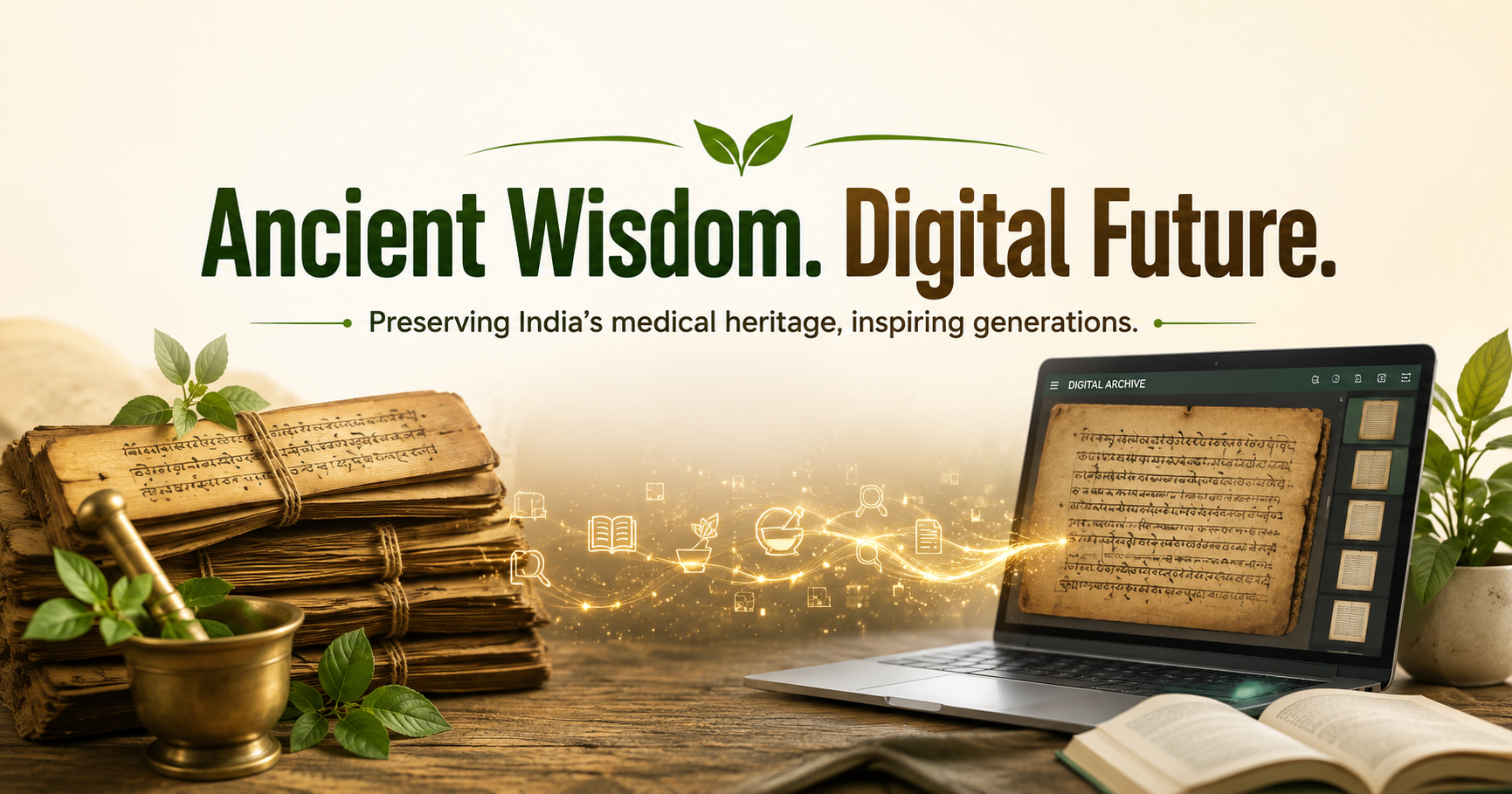
In a significant move to preserve India’s traditional medical heritage, the National Institute of Indian Medical Heritage (NIIMH), Hyderabad, under the Central Council for Research in Ayurvedic Sciences (CCRAS), Ministry of AYUSH, has signed a Memorandum of Understanding with the Sevadhi Museum and Indological Research Institute (SEMIRI), Kumaranalloor, Kottayam, Kerala.
The collaboration aims to digitally preserve and scientifically catalogue a valuable collection of medical manuscripts held by the Sevadhi Museum. The initiative is expected to bring centuries-old medical knowledge into the digital age while making these historical resources more accessible to researchers and scholars.
Preserving a priceless manuscript legacy
The Sevadhi Museum, managed by the Kumaranalloor Ooranma Devaswom, is home to a remarkable collection of more than 30,000 manuscripts, covering temple records, literature, history and India’s traditional knowledge systems.
Among this vast collection are hundreds of medical manuscripts containing valuable information related to Ayurveda and allied medical traditions.
Many of these manuscripts were written on traditional materials and have survived through generations. However, their age and physical condition make preservation an increasingly important challenge.
The new collaboration seeks to address this challenge through systematic digitisation and documentation.
From fragile manuscripts to digital archives
Under the MoU, CCRAS-NIIMH will provide technical and scholarly expertise for the digitisation of the medical manuscripts.
The project will not simply involve photographing or scanning the documents. A descriptive catalogue will also be prepared to document important details of each manuscript, including its title, author, subject, language, script, material, dimensions, number of folios, physical condition and provenance wherever such information is available.
Such cataloguing can provide researchers with an organised gateway to a collection that would otherwise remain difficult to access and study.
Protecting knowledge for future generations
Medical manuscripts are more than historical documents. They can offer insights into the evolution of medical thought, medicinal plants, therapeutic practices, diagnostic approaches and scholarly traditions.
Digitisation can help protect this knowledge from physical deterioration while reducing the need for repeated handling of fragile originals.
For scholars of Ayurveda, Indian medical history and traditional knowledge systems, the creation of a structured digital archive could open new possibilities for comparative research and academic study.
Kerala’s traditional knowledge gets a digital bridge
The initiative is particularly significant for Kerala, which has a long and distinguished history of Ayurvedic scholarship and manuscript traditions.
By connecting the Sevadhi Museum’s archival resources with the specialised expertise of NIIMH, the project creates a bridge between Kerala’s traditional manuscript heritage and modern digital preservation technology.
It also reflects a growing recognition that preserving traditional knowledge requires both respect for its historical context and the use of contemporary scientific and technological tools.
Part of a larger national mission
The initiative is aligned with the broader Gyan Bharatam Mission, which seeks to preserve, digitise and make India’s vast manuscript heritage more accessible.
CCRAS-NIIMH has already developed expertise in the conservation and digitisation of historical medical literature. Its existing digital resources include thousands of medical manuscripts and rare books.
The collaboration with SEMIRI could therefore add an important new body of Kerala’s medical manuscript heritage to India’s expanding digital knowledge ecosystem.
Keeping the past alive in the digital age
The signing of the MoU marks more than an institutional agreement. It represents an effort to ensure that knowledge preserved on fragile manuscripts does not disappear with time.
As ancient medical wisdom moves from palm leaves and traditional manuscripts into carefully documented digital archives, researchers of today—and future generations—will have a greater opportunity to explore the intellectual heritage of India’s traditional systems of medicine.
The message is simple: preserving the past through technology can help India’s traditional knowledge remain alive, accessible and relevant for the future.